

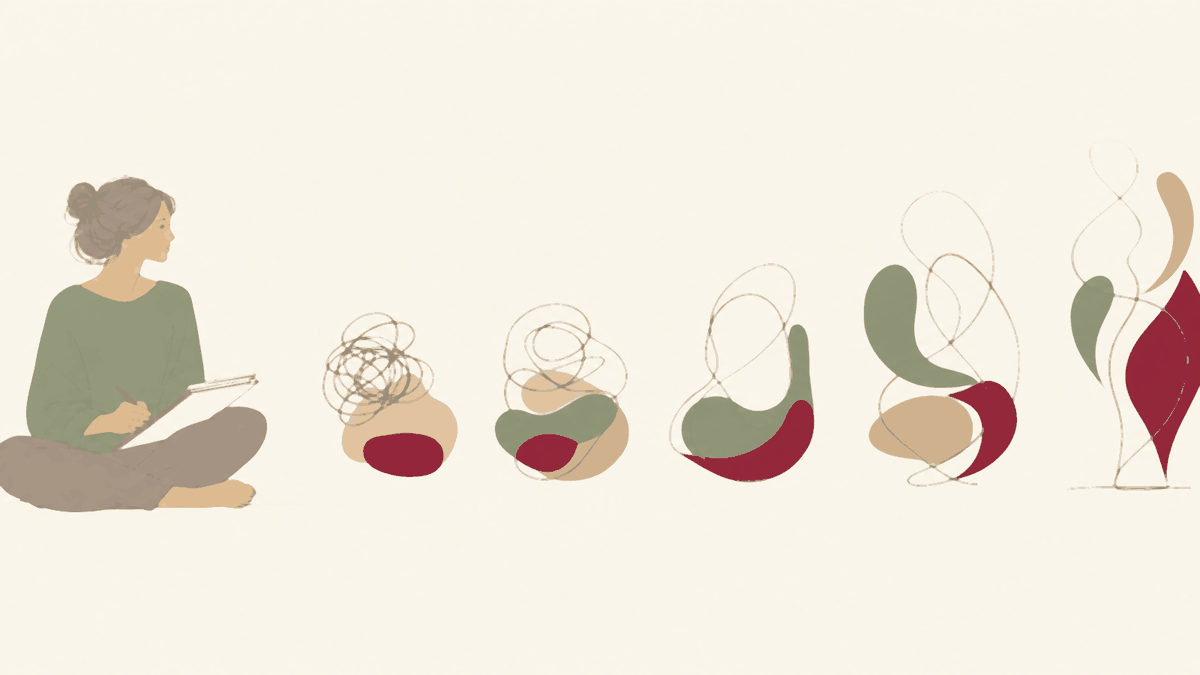
A method you learn in stages
When people ask me how long it takes to learn Autogenic Training, the honest answer is that there is no single timeframe. This is a skill rather than content to memorise: it resembles learning to swim more than reading a manual. The formulas fit on half a page, but becoming familiar with the sensations they refer to takes repetition and a certain amount of patience.
The method comes from the work of the German physician Johannes Heinrich Schultz, who published its manual in 1932. The word autogenic says it plainly: the ease does not come from outside, it is generated by the person practising. That is why the learning is organised in stages and leaves so much room for direct experience. If you would like an overview of the method first, I cover it in what Autogenic Training is and how it works.
How a learning path is organised
In each session one formula is introduced at a time. We try it together, observe what happens and decide how to carry it into the following days. The next session starts from what came up at home: what felt easy, what felt awkward, at which point of the day the practice found its place.
The classic sequence has six basic exercises, from heaviness in the limbs to a sense of coolness at the forehead. The reference sheet published by the United States veterans health system describes exercises introduced week by week in a progressive order, starting with the limbs and only later attending to breathing and the abdomen Whole Health Library sheet. In practice it is not a rigid schedule: the pace follows the person, and sometimes we stay longer with one step because it still has something to show.
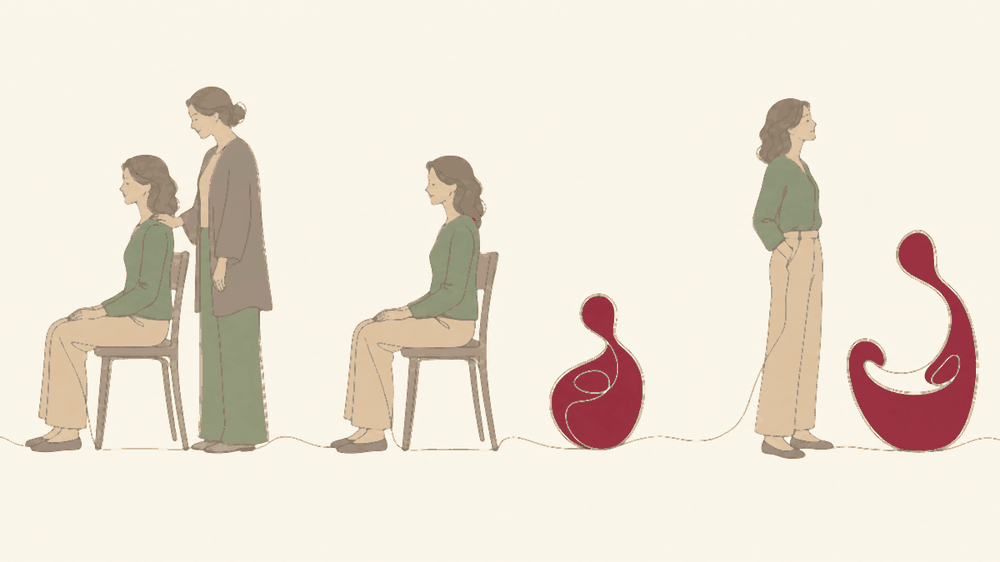
What happens between one session and the next
The most important part of the learning happens outside the session, in ordinary days. Long sittings are not needed: the working rule is little and often, because a few minutes repeated daily leave a firmer trace than half an hour once a week. Many people find it easier to attach the practice to a moment that already exists, such as after lunch or before going to sleep.
- Choose a stable position: seated with your back supported, or lying down.
- Set a recurring time of day, so you do not have to decide each time.
- Stay with your current formula, without adding the ones you have not reached yet.
- Always close with the return: move your fingers, bend your arms, open your eyes.
- Write one line about how it went, with no commentary and no judgement.
What guided audio is for
In the first weeks a guided audio is a useful support. The voice holds the pace, recalls the order of the formulas and frees your attention from one extra task. People starting on their own tend to speed up or forget the closing return, and audio reduces both risks without asking anything in exchange.
There is one thing I prefer to say early on: audio is there to help you learn, not to replace the learning. If after several months the practice only works with headphones, the sequence has not become yours yet. So I usually suggest alternating fairly soon between a guided practice and a silent one, even a shorter one, so the formulas begin to move with your own inner voice.
These questions are not there to establish whether you are practising correctly. They help you gather information about how the practice fits into your day.
The most common doubt: am I doing this right?
This question almost always arrives by the second or third session. It usually comes from a sensation that does not show up as expected: the arm does not feel heavy, the warmth is not there, the mind keeps making lists. The answer is less reassuring and more freeing than it sounds: in Autogenic Training there is no compulsory sensation to reach by a given date.
The only real mistake in Autogenic Training is demanding that ease arrive on command.
Most of the time the doubt simply shows that you are observing carefully, which is exactly what the method asks for. When it turns into constant checking of results, it is worth raising during the session: lowering expectations and shortening the practice is often enough to change the picture.
Passive concentration, the least intuitive part
The most delicate technical point has a precise name: passive concentration. It means turning your attention to a part of the body and repeating the formula without forcing anything, letting the response come if it comes. The attitude resembles falling asleep: nobody sleeps by deciding to sleep, you set the conditions and stop checking.
- Repeat the formula calmly, without trying to produce the sensation.
- Return to the formula when your mind drifts, rather than starting over.
- Do not measure results during practice: checking interrupts what you are learning.
- Accept that some sessions feel uneventful: they are part of the process.
What research says, without overstating it
Autogenic Training has been studied extensively. The most cited synthesis remains the meta analysis by Stetter and Kupper published in 2002, which gathered controlled studies across a range of conditions and found medium to large effects compared with no treatment, particularly for anxiety and tension. The same authors add a point I think is worth reporting: compared with other psychological interventions the method shows no advantage. It is therefore not a better choice, it is one more option.
A systematic review with meta analysis by Seo and Kim, published in 2019, screened 950 identified studies, selected 21 and included 11 in the quantitative analysis, observing reductions in anxiety and in depressive indicators alongside changes in heart rate variability. These are encouraging results from small samples. They describe a practice that can help with stress management, not a treatment, and they say nothing about guaranteed learning times.
When practice becomes autonomous
Autonomy does not arrive with a certificate. It looks more like the moment you notice you have practised on a train, in a waiting room or in the ten minutes before a meeting, with no preparation and no audio. At that point the guided path has done its job, and what remains is a skill you can pick up again even after a long break.
In the paths I offer, Autogenic Training often meets the relationship with food, because hurry and tension change the way we eat: I write about that in why I eat when I am stressed. If you want to see how an accompaniment works, everything is described on the paths page.
This article is informative in purpose. Autogenic Training is a relaxation education path and does not replace a diagnosis or a therapy. With any ongoing medical condition, it is advisable to ask your doctor first.
Frequently asked questions
It depends on the person and on how regularly you practise. Becoming familiar with a single formula usually takes one or two weeks of short daily practice, while the full sequence often takes a few months. No timeframe is guaranteed.
The working rule is little and often: two or three short sessions a day work better than one long session once a week. A few repeated minutes are enough in the first weeks.
Audio is a useful support at the start, because it holds the pace and recalls the order of the formulas. It is there to help you learn, though: over time it helps to alternate guided and silent practice so the sequence becomes autonomous.
The doubt is normal and appears in almost everyone during the first weeks. No sensation is compulsory: the right attitude is passive concentration, meaning you repeat the formula without forcing it and without checking the result while you practise.